Mechanical exclusion serves homes where Norway rats, roof rats, and house mice exploit structural transitions between brick facades, crawlspace vents, and rooflines. In older architectural properties across Hillcrest,…
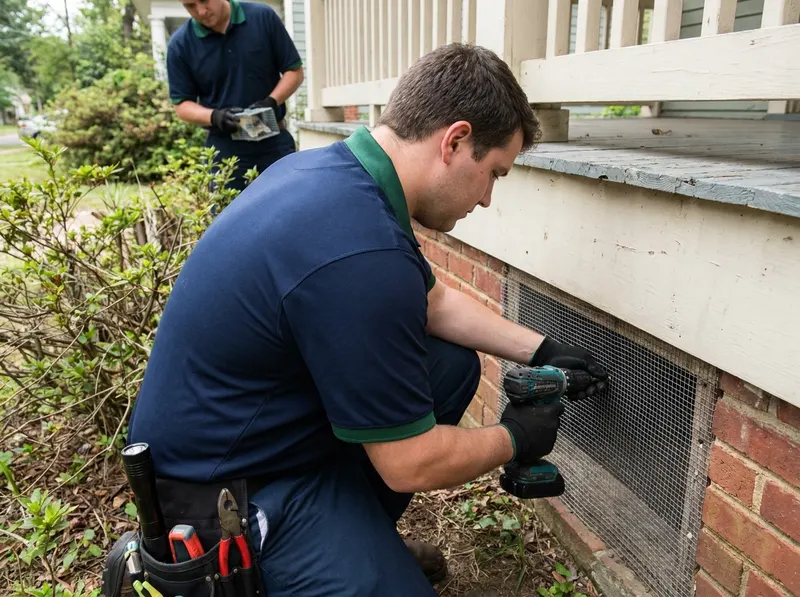
Mechanical exclusion serves homes where Norway rats, roof rats, and house mice exploit structural transitions between brick facades, crawlspace vents, and rooflines. In older architectural properties across Hillcrest, Stifft Station, and The Heights, crawlspace foundations frequently settle, leaving quarter-inch gaps along the sill plate that rodents navigate with ease. Roof rats across Riverdale and Pleasant Valley use mature tree canopies to reach soffits and roof valleys. Applying exterior rodenticide pellets in these settings often results in rodents expiring inside wall cavities, causing odor issues and secondary insect infestations. Mechanical exclusion substitutes poison with physical denial: sealing weep holes with copper mesh, securing crawlspace vents with 19-gauge wire mesh, and mounting heavy-gauge metal flashing over chewed fascia corners.
Decision guidance relies on building history and infestation depth. If scratching sounds occur inside ceiling drywall at night, an attic trapping sequence must run concurrently with exterior sealing. Trapping without exclusion permits incoming rodents to backfill the territory; exclusion without trapping locks active pests inside living spaces where they chew electrical wiring and soil fiberglass insulation. In slab-on-grade builds throughout Chenal Valley and Broadmoor, entry primarily concentrates at air conditioning line-set penetrations and garage door corner gaskets. Sealing these transitions stops entry points without binding homeowners to perpetual monthly chemical broadcast programs.
Field execution operates through four systematic phases: 1. A 360-degree perimeter audit mapping every gap measuring one-quarter inch or greater from grade to gutter line. 2. Exterior reinforcement using galvanized steel mesh secured with mechanical masonry anchors or exterior-rated fasteners that rodent teeth cannot breach. 3. Placement of precision mechanical snap traps along documented interior runs, oriented perpendicular to joists and plumbing stacks. 4. Retrieval and reset visits until zero trap activity confirms the interior space is completely clear.
Every job gets a firm, written price after a free on-site visit.
Tell us about your mechanical rodent exclusion and trapping job in Rock and we'll send a clear, written quote, usually the same day.
 Miresto Pest Guard