Targeted remediation pairs industrial electric or direct-fired convective heat trailers with specialized non-pyrethroid perimeter residuals. Thermal remediation operates by elevating the internal temperature of wall…
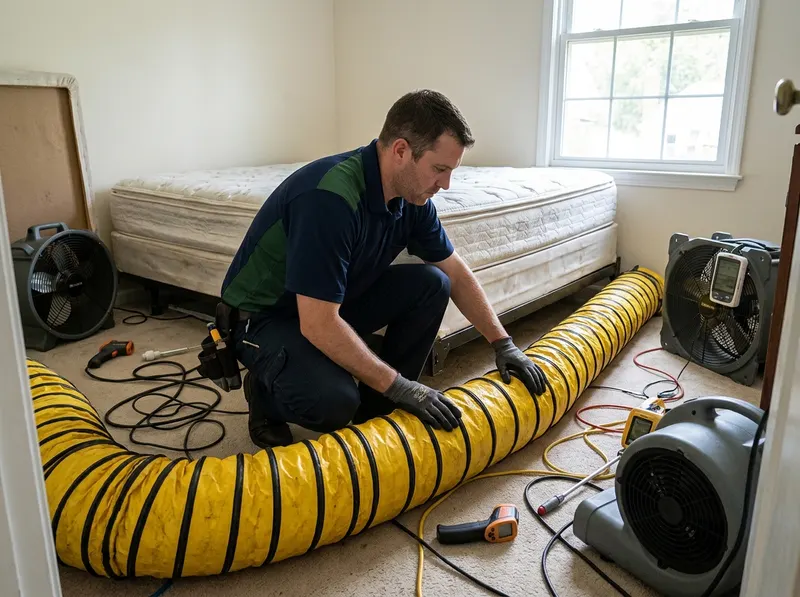
Targeted remediation pairs industrial electric or direct-fired convective heat trailers with specialized non-pyrethroid perimeter residuals. Thermal remediation operates by elevating the internal temperature of wall voids, baseboards, and furniture fabrics to between 122°F and 135°F for a minimum dwell time of 90 minutes. This thermal threshold causes irreversible protein coagulation and cellular desiccation across eggs, nymphs, and adult bed bugs. For older historic properties with plaster-over-lath construction in Hillcrest, Stifft Station, and Capitol View, convective heat penetrates deep structural cavities that liquid sprays cannot navigate. In newer slab-on-grade developments near Chenal Valley and Pleasant Valley, thermal distribution reaches behind base molding and beneath modular subflooring without tearing apart structural elements.
Contact application serves as the secondary structural shield, utilizing amorphous silica dust and targeted botanical or synthetic microencapsulations around electrical conduits, plumbing penetrations, and perimeter carpet tack strips. Silica dust physically abrades the waxy epicuticle layer of the insect, causing water loss and death within 24 to 72 hours without inducing chemical resistance. This non-systemic barrier addresses the edge case of exterior wall heat dissipation, which can occur during cooler winter cold snaps along the Arkansas River corridor in Riverdale and Cammack Village. Homes in Boyle Park and Broadmoor characterized by crawlspaces receive dedicated foundation interface sealing to prevent pest retreat into basement voids during heating cycles.
Thermal remediation offers same-day eradication of all developmental stages in a single visit, but requires deliberate preparation, including the removal of cosmetics, vinyl records, and medication. Standalone chemical or contact programs maintain a lower entry price point starting at the $250 minimum charge, yet demand multiple spaced visits across 30 to 45 days to capture emerging nymphs following egg hatch. A standard three-bedroom home uses approximately 4 to 8 convective heat fans to circulate 4,500 CFM of heated air, ensuring consistent core temperature monitoring via multi-point digital thermocouple sensors placed inside furniture interiors.
Every job gets a firm, written price after a free on-site visit.
Tell us about your bed bug thermal and contact remediation job in Rock and we'll send a clear, written quote, usually the same day.
 Miresto Pest Guard